
I am delighted to share this interview with Khaled Emam, a cultural ambassador for Egypt in Brazil and an arts producer.
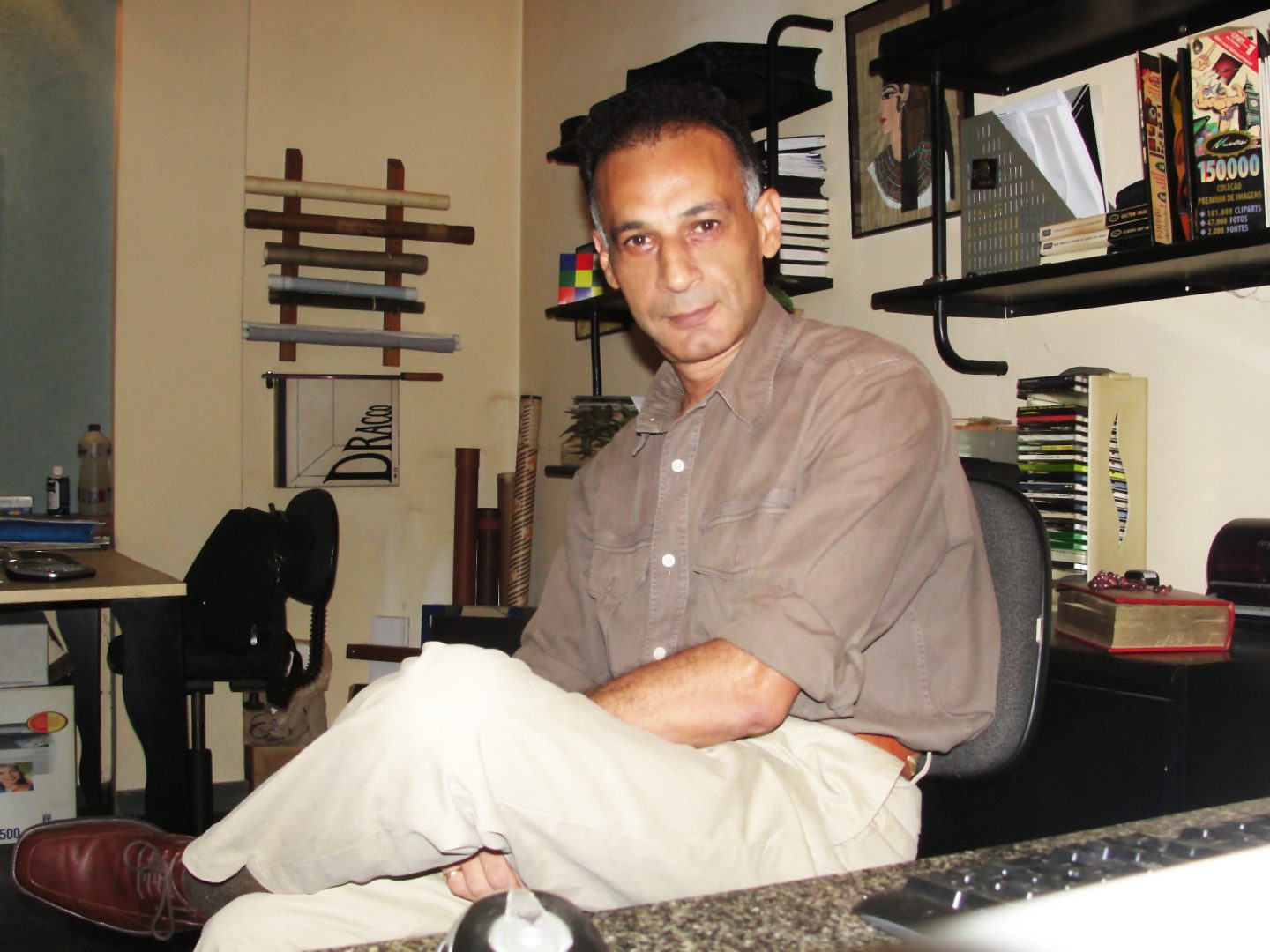
Khaled studied engineering and completed a master's degree in design before qualifying in tourism. He worked as a tour guide in Cairo for a well-known multinational company.
He comes from a large family of five women and three men.
In 1992, he left Egypt for Brazil and has lived in Rio de Janeiro ever since. In 1994, he opened an architecture and design studio, which continues to operate. Alongside this work, he directs and produces projects connected with Arab art and culture.
how did you become involved in oriental dance?
Khaled: Here in Brazil, I have always attended Arab cultural events to support my friends—musicians and dancers—and to stay connected to my country. In Egypt, I was already surrounded by the arts: relatives and childhood friends were involved, and working in tourism brought me further contacts and opportunities to take part in dance events.
When dancers and musicians in Brazil began asking me questions about our culture, I realised how much information was missing. I started looking more closely at the belly dance scene here and saw a real need for cultural knowledge. I always try to help people who show a sincere interest in our art and culture understand that belly dance is far more than a dance: it is an integral part of our traditions.
I created my blog as a resource for studying Arab culture in Brazil, and it has helped me enormously. Seven years ago, I began offering artistic consultancy and holding my first intensive workshops, courses and lectures.
In 2013, I started producing international festivals of Arab dance and music to make our art and culture better known in Brazil. I believe a solid grounding in the culture is essential both for performing and for teaching.
what do you think about the idea of a “miss universe” of oriental dance?
Khaled: I think it calls for particular qualities beyond glamour. If a dancer understands what she is aiming for, I believe nothing should stand in her way. Ultimately, every dancer can be a queen on stage through her own authentic presence.
what qualities should an oriental dancer have?
Khaled: First of all, stage presence: the dancer should enter with energy and poise, and leave the stage with the same care. Every dancer needs a distinctive identity, a personal style and an energy of their own.
A dancer must understand the essence of the dance to interpret each style correctly. Simplicity matters too. Even without the most expensive costume in the world, what matters most is the harmony between the dancer and the music. They should become one, rather than the dancer feeling like an addition to the music.
what advice would you give someone who wants to grow as a dancer?
Khaled: Seek genuine knowledge and understand the roots. Belly dance is a rich culture of styles, rhythms and traditions. Develop your own artistic identity and keep things simple. For me, the path to success is to dance with joy, respect and love. Dance for yourself before dancing for an audience, and always keep learning about Arab culture.
what does “raqs sharqi” mean to you, and which style is your favourite?
Khaled: Raqs sharqi is like a film that is always playing in my mind: a story, a collection of memories. It is my life, my family, our celebrations and my neighbourhood. When you understand that belly dance existed in our homes before it moved onto the stage, you will understand what I mean.
It is part of our lives and traditions, present in the home in all its simplicity. We also grow up watching its professional side on stage, with its glamour and its divas. It is a film we are part of ourselves.
My favourite style is classical, even though I grew up in a working-class neighbourhood where baladi was part of everyday life. I love the artistry of classical dance, the feeling of interpreting a poem.
I experienced baladi at home, but not classical dance, which undoubtedly adds to its appeal for me.
could you share a story or a particularly special memory?
Khaled: I have so many memories of living in Cairo, where I have always had—and still have—many friends. Any time spent in good company was quality time, and those are the moments I treasure.
Time with my students is special too. Now that distance keeps me from those places, I particularly miss evenings by the Nile, being in the desert near the pyramids of Giza, and playing backgammon with friends. They were wonderful moments that I long for.
what do you think oriental dance can offer the world?
Khaled: Dance has so much to offer, emotionally and physically. It builds confidence and self-esteem. When all eyes are on a dancer during a performance, she can feel admired and fully in command of the moment.
It also brings out feminine sensuality and, for men performing folklore, an expression of masculinity. It encourages people to care for themselves—their health, appearance and well-being. Most importantly, it opens up the world: you get to know people and make friends across cultures and countries through a shared art. That is fantastic.
what should a dancer communicate when performing?
Khaled: First, listen to the music. The dancer must connect with the instruments, the voice and the poetry. As we say in Egypt, the dancer is another instrument in the orchestra, so that harmony and understanding of the music are essential.
Second, there is the audience. The dancer needs to connect with people, draw them into the performance and speak to them through movement.
could you name two dancers you particularly admire?
Khaled: There are so many! I have had the privilege of watching and spending time with great belly dance divas, each with her own personality and style. If I have to choose just two, they would be Soheir Zaki and Fifi Abdo.
the origins of oriental dance are widely debated. as an egyptian, what is your view?
Khaled: Yes, there is uncertainty and confusion about the origins of belly dance. I have given lectures on the subject here. In my view, its origins are entirely Egyptian. I trace its earliest movements to ancient Egypt, through rituals that brought together the four elements of nature.
Over time, the dance developed its styles, poetry and costumes into the form we know today. But I have no doubt that its origins are Egyptian.
To close the interview, I would like to thank the readers for taking the time to read it, and Verónica Pavón for her important questions and for making space on her website for people to discover a little of our art and culture.
Thank you very much.